National Space Conference 2025: Charting a New Frontier for Societal Resilience, Transformation and Intelligence
From 20 to 22 August 2025, the National Space Conference (NSC), brought together policymakers, scientists, defence officials, industry leaders, and innovators to discuss South Africa and Africa’s evolving role in the space sector. The conference was hosted by the Department of Science, Technology and Innovation (DSTI), coordinated by the National Earth Observations and Space Secretariat (NEOSS), and co-organised and co-funded with the South African National Space Agency (SANSA), with the South African Air Force (SAAF) as a support partner.
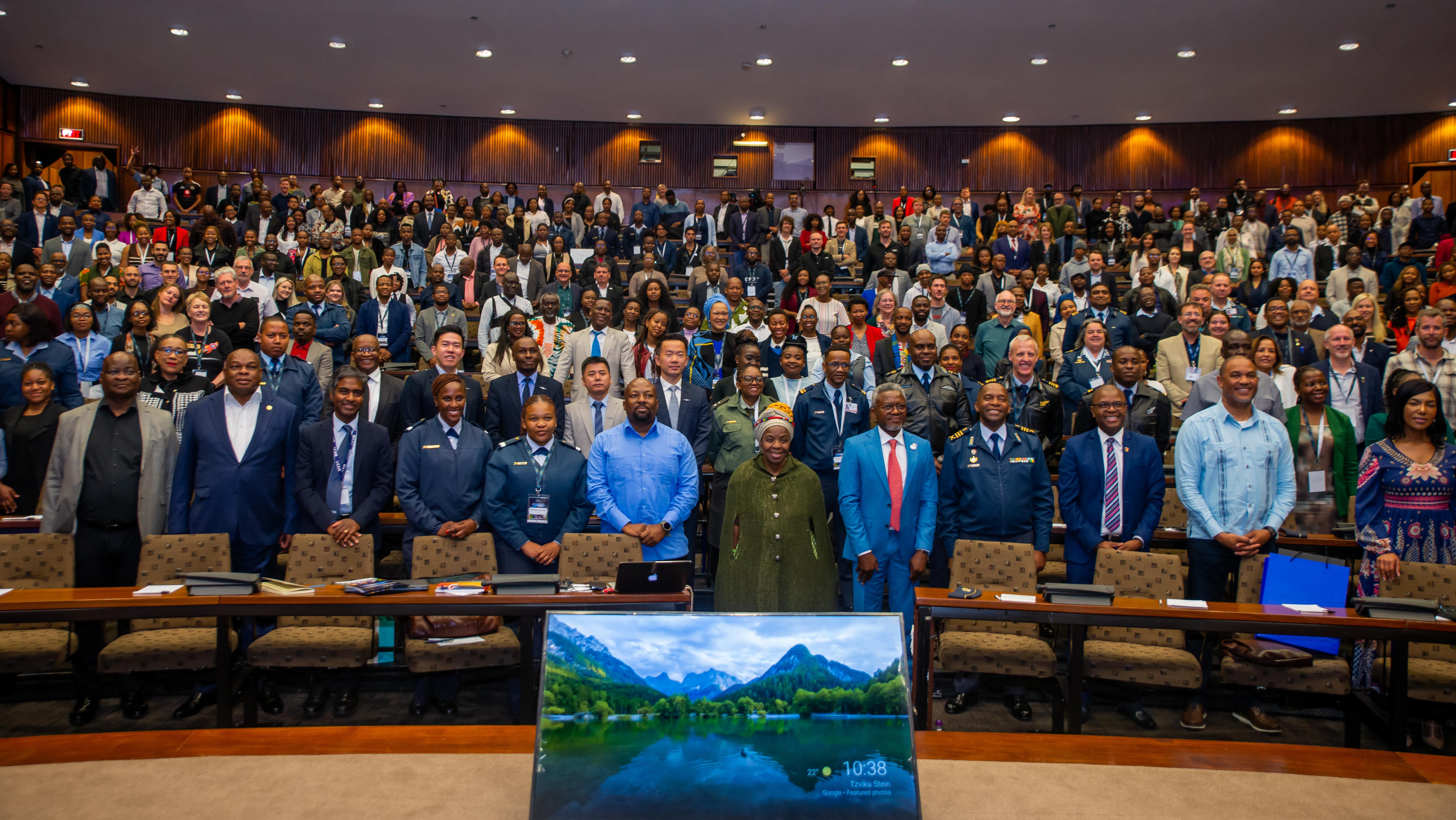
Held under the theme “Space for Societal Resilience, Transformation and Intelligence,” the three-day conference highlighted the growing importance of space science, technologies and applications in addressing socio-economic challenges, strengthening resilience and supporting national development. The opening session set the tone for the conference, with national leaders emphasising collaboration, innovation and Africa’s role in shaping its own space future.Mr Humbulani Mudau, CEO of SANSA, encouraged delegates to reflect on the continent’s position in the global space sector, asking: “What role should we play to elevate South Africa and Africa’s space priorities?”Dr Mlungisi Cele, Director-General of DSTI, highlighted the importance of stronger partnerships and collaboration across the space ecosystem. He called on stakeholders to work together, reduce unnecessary competition and strengthen South Africa’s contribution to the broader space community.Dr Thulani Dlamini, CEO of CSIR which hosts NEOSS, reflected on the CSIR’s long-standing contribution to science, technology and innovation, including its role in supporting developments within the space sector.Lieutenant-General Wiseman Mbambo of the SA Air Force called for stronger African leadership in shaping the continent’s space agenda, emphasising the importance of vision, courage and collaboration.Building Resilient Space Infrastructure
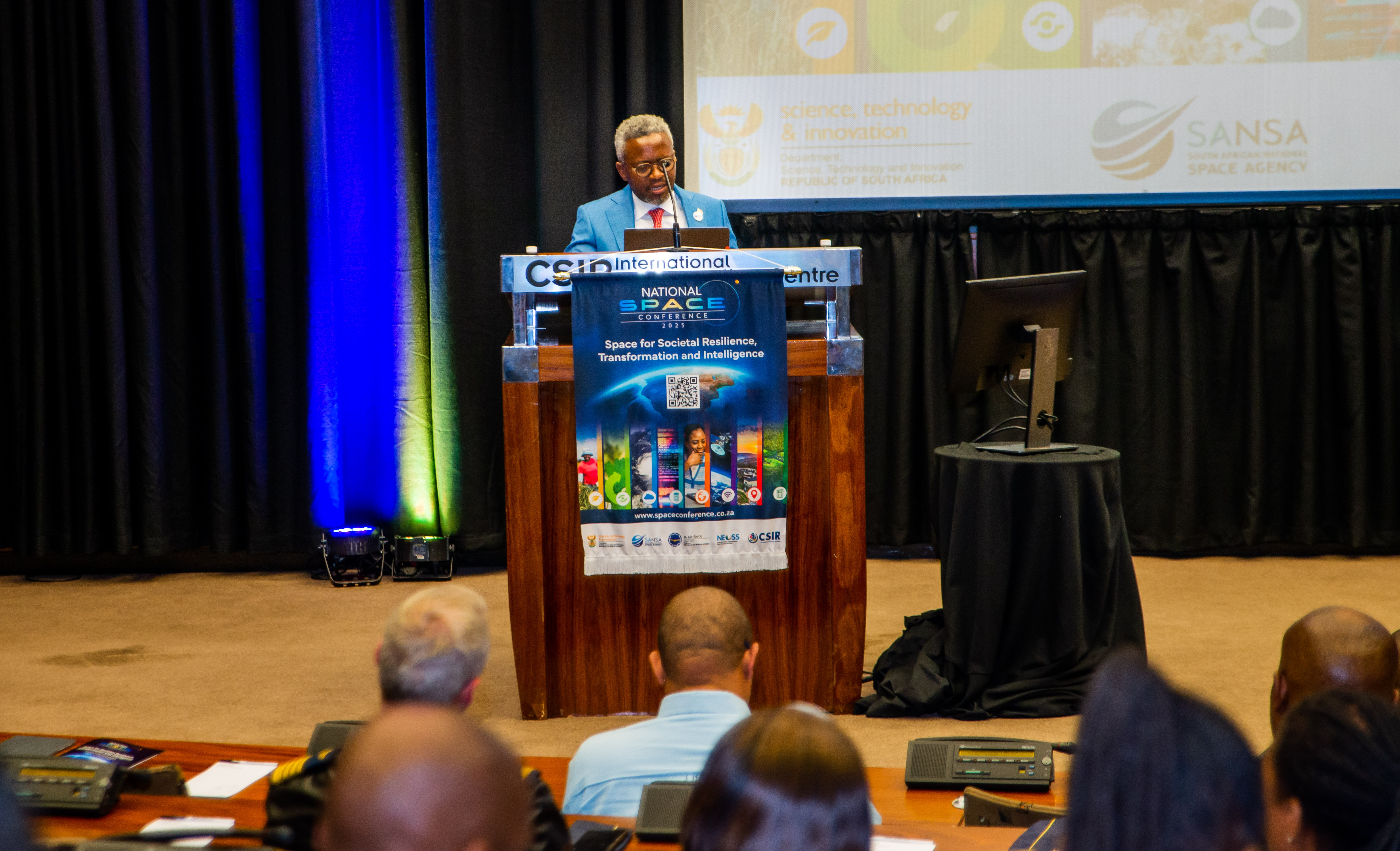
The first technical discussions focused on the importance of reliable and sustainable space infrastructure. Speakers highlighted the need for secure systems that societies can depend on, particularly during emergencies and disasters. Discussions also explored the growing use of artificial intelligence and on-board processing to enable satellites to analyse information more efficiently and support faster decision-making. Space-based applications for climate monitoring, flood detection, wildfire management and early-warning systems featured strongly in the discussions. Participants also considered the economic opportunities associated with developing local manufacturing, downstream services and new industries linked to space technologies. The discussions reinforced the importance of strong partnerships between government, industry, academia and research institutions, supported by appropriate policy, governance and cybersecurity frameworks.
Discussions on the first day highlighted the importance of resilient and sustainable space infrastructure, including the growing use of artificial intelligence, on-board processing and space-based applications for disaster management, climate monitoring and early warning. Speakers also emphasised the need for stronger partnerships, local industry participation, cybersecurity and supportive governance frameworks.
A dedicated session on space weather highlighted the potential impact of geomagnetic events on critical infrastructure and satellite-dependent services. The October 2024 geomagnetic storm was used to demonstrate the importance of improved forecasting, preparedness and the integration of ground- and space-based observations.
Day Two focused on the growing integration of Earth Observation, artificial intelligence and advanced analytics to strengthen planning and decision-making.
Discussions covered emerging applications such as AI-enabled forecasting, high-resolution Earth Observation, satellite edge computing and maritime monitoring. Practical examples demonstrated how these technologies are already supporting infrastructure management, agriculture, environmental monitoring, skills development and other national priorities.
The sessions also highlighted opportunities to strengthen South Africa and Africa’s participation across the space value chain through local innovation, manufacturing, skills development and industry growth.
The final day focused on translating space science and technology into practical socio-economic benefits. Discussions demonstrated applications in food security, climate monitoring, disaster response, infrastructure planning, education and public service delivery. Speakers emphasised the importance of ensuring that space-derived data is accessible, appropriately governed and converted into usable information and solutions that respond to societal needs. National coordination and collaboration across government, academia, research institutions, industry and communities were also highlighted as important enablers of impact.
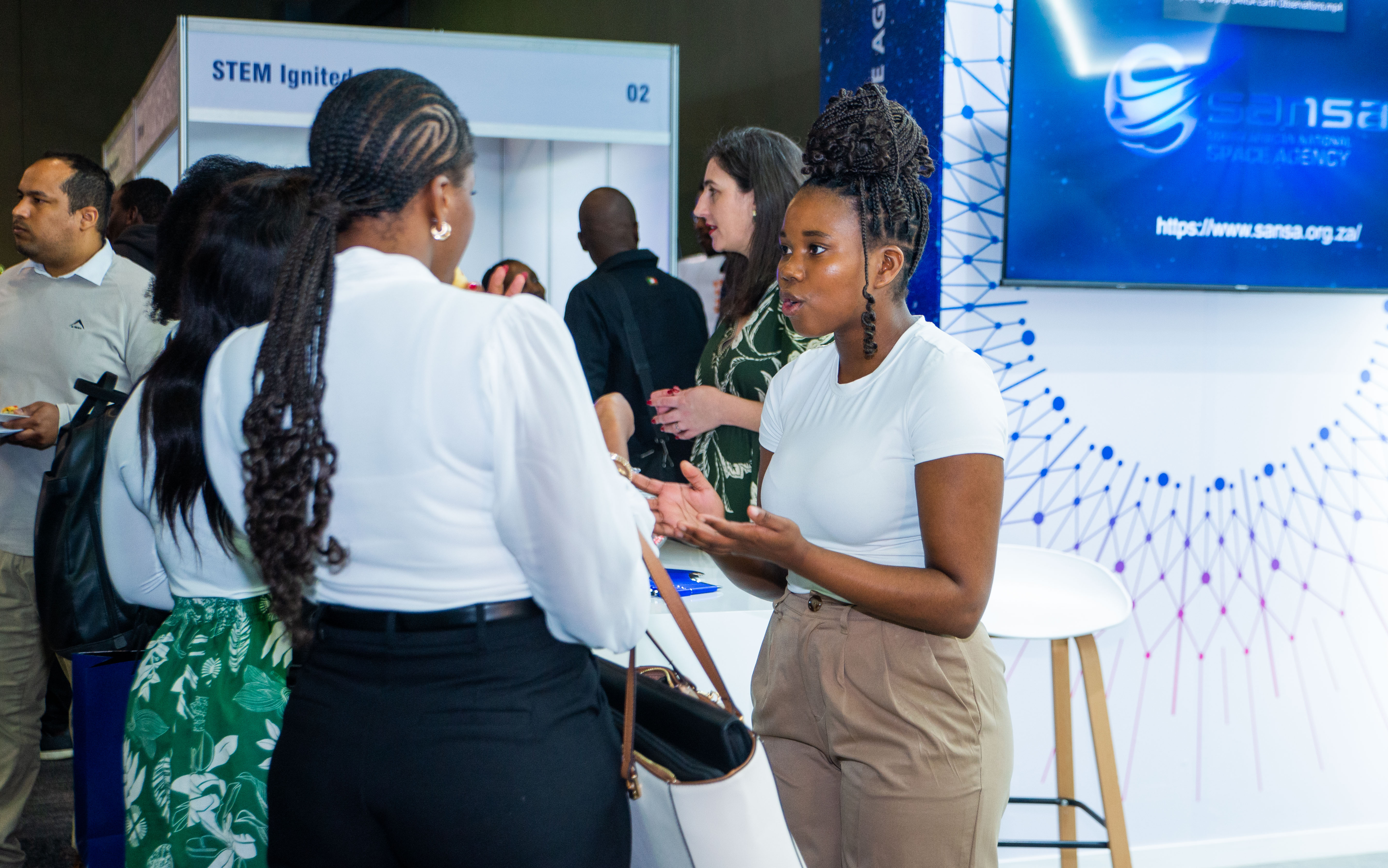
The NSC also featured an exhibition showcasing local space-related capabilities, technologies, products and applications from industry, research institutions and other stakeholders. Electronic poster presentations provided a platform for young researchers, students and emerging professionals to present their work, promote knowledge exchange and increase youth participation in the space sector.
Through collaboration between government, research institutions, academia, industry and other stakeholders, South Africa has an opportunity to strengthen its contribution to Africa’s space sector while ensuring that the benefits of space science and technology are translated into meaningful national and continental impact. For the Department of Science, Technology and Innovation, the National Space Conference provides an important national platform to bring together key stakeholders across the space ecosystem, support coordination around national priorities, and strengthen collaboration between government, industry, academia and research institutions. It also provides an opportunity to identify emerging opportunities and challenges, showcase South African capabilities and applications, and ensure that investments in space science and technology contribute to innovation, economic development, resilience and broader societal impact.